
24小时 AI快讯 实时更新
聚合全球 AI 厂商、模型、API、开源项目与服务状态动态。
LATEST UPDATES
最新获取
2026-09-02
-
THU98/pi05_franka_dual_arm_uev_full_20k
Hugging Face模型更新查看详情 -
cosmos1030/gmp-kd3e-1-s50pct-lr1e-4_20260902_131607
Hugging Face模型更新查看详情 -
Shanmuk4622/cardiomamba-net
Hugging Face模型更新查看详情 -
Jongbin-kr/llama-3.1-8b-instruct_SNI-ours-c_58325_ffn-only
Hugging Face模型更新查看详情 -
LafouCC/PG-Personalization-ckpt
Hugging Face模型更新查看详情 -
Jongbin-kr/llama-3.1-8b-instruct_SNI-ours-c_29228_ffn-only
Hugging Face模型更新查看详情 -
JuloEco/opsiom-fr-checkpoints
Hugging Face模型更新查看详情 -
vect0r18/mirror-beamablee-fin-05-8c095ca8
Hugging Face模型更新查看详情 -
loudersyoakim/absa-mbert-asc
Hugging Face模型更新查看详情 -
codewithdark/EVLMs-v2-MIMIC-CXR
Hugging Face模型更新查看详情 -
网信办通报“清朗 · 整治 AI 应用乱象”典型案例:涉 AI 魔改经典、换脸假冒等,豆包、元宝、千问、文心一言严格限制违规内容输出
本次专项行动已清理超 561 万条违规信息,查处超 4.9 万个账号,涉及 AI 魔改经典、换脸假冒等违规问题,多平台已落实管控整改#清朗整治AI乱象#
行业媒体行业动态查看详情
-
对话范承工:模型同质化时代,记忆才是AI真正的护城河
AI下半场,比的是谁掌握记忆归属权。
行业媒体行业动态查看详情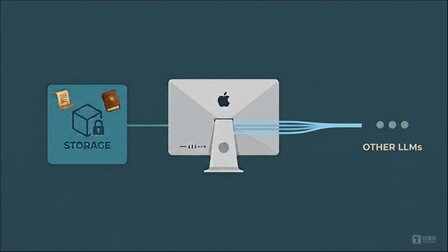
-
mimeo: Compiling Public Expert Corpora into Agent Skills and Testing What Transfers
arXiv:2609.00453v1 Announce Type: new Abstract: Giving an agent a file about a named expert can supply hard-to-find material, produce a recognizable persona, or change what the agent decides. These are different claims. We test each one. mimeo is an open-source tool that finds a person's public work, checks each extracted quotation against the cached source text, and writes a file an agent can load. Eight logged builds averaged 38 model calls; the check rejects 13.2% of extracted quotations. We tested four expert files with one coding-agent harness. Knowledge access was clearest: mimeo answered all 20 obscure, quotation-heavy questions; no closed-book condition answered more than 10. Keyword search (BM25) over the same pages answered 15-17, a gap this sample cannot resolve. Grounding showed one clear benefit: personas written from model memory misstated a documented position on 1-4 of 20 answers under every grader; the plain agent and mimeo never did. Every persona was easy to spot on short open prompts, and adding task material lowered identification by 18-23 points. mimeo was no more identifiable than a from-memory profile. Judgment transfer remained unresolved because both tests hit their ceiling: every condition found 94-97% of the problems planted in engineering tasks and scored 94-100% on 16 new application scenarios. An AI-judged "sounds like the expert" score changed with the judge: two of four preferred answers based on a model's stereotype, while two found no difference on the same text. That is a caution against relying on a single AI judge. The evidence supports
arXiv AI 研究研究动态查看详情 -
Conversation Coach: A Voice-enabled AI System that Helps Practice Difficult Workplace Conversations
arXiv:2609.00441v1 Announce Type: new Abstract: Effective manager-employee communication is critical for retaining high performers and developing underperformers, yet training managers in these skills remains costly. Text-based chatbots offer a scalable approach but cannot provide realistic rehearsal: managers need to practice speaking aloud to build confidence before high-stakes conversations. In this paper, we propose Conversation Coach, a voice-first AI system that enables managers to rehearse difficult workplace conversations in a realistic spoken format. The system addresses three challenges: achieving low-latency interactions with strong language understanding, enabling adaptive conversations through configurable bot personalities that simulate different employee types, and generating personalized feedback on content and policy compliance. We compare an end-to-end speech-to-speech model with a cascaded approach combining automatic speech recognition, a large language model, and text-to-speech synthesis. The end-to-end approach achieves 3$\times$ lower median (P50) latency with native barge-in capability at an estimated 8$\times$ lower cost, while the cascaded approach offers superior reasoning essential for coaching quality. We deployed the cascaded architecture in production, where 40,000+ managers used it over six months, with adoption patterns indicating selective use for difficult conversations.
arXiv AI 研究研究动态查看详情 -
SAGE: State-Grounded, Abstention-Aware Evaluation of Task-Oriented Dialogue Agents
arXiv:2609.00434v1 Announce Type: new Abstract: Evaluating task-oriented dialogue agents requires judging not merely whether a reply reads well but whether each turn advances the underlying workflow state correctly--a distinction conventional holistic LLM judges can miss because they evaluate the available context as a single unit and require one or more full-model calls per turn. We propose SAGE (State-Grounded Abstention-Aware Evaluation), which compiles a workflow specification and per-turn state diff into atomic, schema-grounded criteria and routes each through a cascade of symbolic and encoder/NLI verifiers that abstain rather than guess, aggregating criterion verdicts into a turn-level decision with an evidence trace. Its recommended operating point, SAGE-Core, decides 81--91% of criteria with only the compiler, symbolic rules, and on-device encoders--at zero paid LLM cost--while SAGE-LLM adds an optional focused-LLM fallback for open-class criteria. Across four slices spanning MultiWOZ, Schema-Guided Dialogue, and ABCD, no evaluated LLM-as-a-judge baseline--including a state-aware GPT-4.1 judge and cheaper GPT-4.1-mini variants--significantly exceeds SAGE-Core on any slice, even though the GPT-4.1 G-Eval judge costs $4.7--8.0 per 1,000 turns to SAGE-Core's $0. A two-annotator human audit (n=200, $\kappa$=0.94) confirms strong label fidelity on the transcript-visible failure classes--where, excluding the weak-salience IUV class, SAGE-Core is statistically tied with the strongest LLM judge--and honestly scopes ignored-user-value as a state-consistency signal with weak
arXiv AI 研究研究动态查看详情 -
SpecMind: Enabling Spectrum Intelligence via Multi-Agent Hybrid Retrieval-Augmented Generation
arXiv:2609.00427v1 Announce Type: new Abstract: The exponential growth of wireless devices is driving unprecedented spectrum demand, pushing spectrum management toward more fine-grained decisions across space, time, and device constraints. As a result, spectrum policymakers and engineers must process large volumes of data that come from diverse sources and take many different forms, such as text and tables. These data sources are often disaggregated and require significant time and effort to integrate, search, and interpret. Furthermore, most of this information is formatted for human understanding and is not readily accessible to automated systems. To address this challenge, we propose SpecMind, a novel Multi-Agent Retrieval-Augmented Generation (RAG) system for spectrum intelligence that performs reasoning over heterogeneous data sources. This system enables autonomous agents to coordinate specialized sub-agents that retrieve and synthesize knowledge across policy proceedings, legal regulations, and license databases. We develop SpecBench, a question and answer (Q&A) dataset based on real-world license records and policy proceedings, addressing the lack of evaluation resources for RAG systems in the spectrum domain. Experimental results demonstrate that SpecMind outperforms traditional, general-purpose RAG systems across spectrum-related tasks, achieving over 80% win rate against strong baselines. The agent-based design enables more accurate retrieval, better contextual reasoning, and improved task completion across diverse query types.
arXiv AI 研究研究动态查看详情 -
Dependency-Aware Chain-of-Thought Compression for Financial Reasoning
arXiv:2609.00413v1 Announce Type: new Abstract: Chain of thought prompting improves complex reasoning, but its long intermediate traces create substantial inference cost and hinder practical deployment in financial settings. We present a Hierarchical Semantic Distillation Network, HSDN, for compressing reasoning chains while preserving answer accuracy and logical coherence. The framework combines semantic segmentation, dependency graph construction, dual encoder importance scoring, constrained segment selection, and local boundary rewriting. A frozen Qwen3 4B model is used only for feature extraction and final answer generation, while the compression process remains structured and interpretable. On the AFAC2025 benchmark, HSDN achieves 91.0% accuracy with 68.4% compression, outperforming strong compression baselines in overall score and reasoning coherence. The results show that graph guided compression is effective for high stakes financial reasoning tasks.
arXiv AI 研究研究动态查看详情 -
RestoreBench: Can AI Agents Restore Power Flow Convergence?
arXiv:2609.00384v1 Announce Type: new Abstract: Large Language Model (LLM) agents increasingly automate multi-step engineering workflows through tool use, interpretation of intermediate results, and iterative planning. Diagnosing and resolving non-convergent power flow cases is a promising yet largely unexplored application, as it requires engineering judgment, experimentation, and decision-making within constrained action spaces. We introduce a benchmark that evaluates these capabilities across multiple LLMs and three architectures: \emph{chatbot}, \emph{single agent}, and \emph{multi-agent} systems. The evaluation covers two power grids and 46 cases per grid, each requiring one or more corrective actions to restore convergence. The benchmark defines the simulation environment, observation and action spaces, and evaluation metrics, providing a reproducible foundation for developing agentic AI systems for power system planning and operation. The code is available at https://github.com/Mansutti081/RestoreBench
arXiv AI 研究研究动态查看详情 -
Dr. Claw: An AI Scientist Workspace for Vibe Research
arXiv:2609.00365v1 Announce Type: new Abstract: Command-line coding agents (e.g., Claude Code, Gemini CLI) can already read and write files and sustain long sessions, yet end-to-end research still fragments across chat tools, IDEs, terminals, and writing environments, and the decisions that make it auditable are rarely preserved. We present Dr. Claw, an open-source workspace that wraps existing coding-agent executors in a controllable and auditable human-in-the-loop workflow rather than introducing another autonomous agent. Persistent state objects, a reusable skill library, and multi-executor coordination link human decisions to AI execution, turning planning, execution, and writing into one traceable, recoverable loop. We demonstrate Dr. Claw through an interactive three-view scenario and a failure-recovery walkthrough, and evaluate it against a bare command-line agent sharing the same backend executor, so the comparison contrasts the whole orchestration layer (task graph, state objects, and skill library) with the agent it wraps. Holding the executor fixed, Dr. Claw scores higher on research completeness while persisting an auditable, recoverable process trail. Demo access: repository https://github.com/OpenLAIR/dr-claw, released under AGPL-3.0 with GPL-3.0 upstream components.
arXiv AI 研究研究动态查看详情 -
A Stable Aggregation Method for Quantum Federated Learning
arXiv:2609.00356v1 Announce Type: new Abstract: Quantum federated learning (QFL) enables clients to train quantum neural network (QNN) models without sharing private data. We find that aggregation in QFL is unstable under heterogeneous data, unreliable communication, variable fidelity, latency, and quantum hardware noise. Moreover, QFL is non-trivially challenging because several QNN parameters are periodic angles, where Euclidean averaging often fails to capture the inherent dynamics. We develop a novel self-consistent midpoint aggregation method for stable QFL design and implementation. We combine QoS-aware client weighting, circular parameter aggregation, and bounded midpoint-based update control. We perform several angular tests and IBM real Quantum machines experiments for validation confirming our approach. Extensive evaluations and experiments on medical and financial datasets show improved stability, lower volatility, and competitive accuracy.
arXiv AI 研究研究动态查看详情